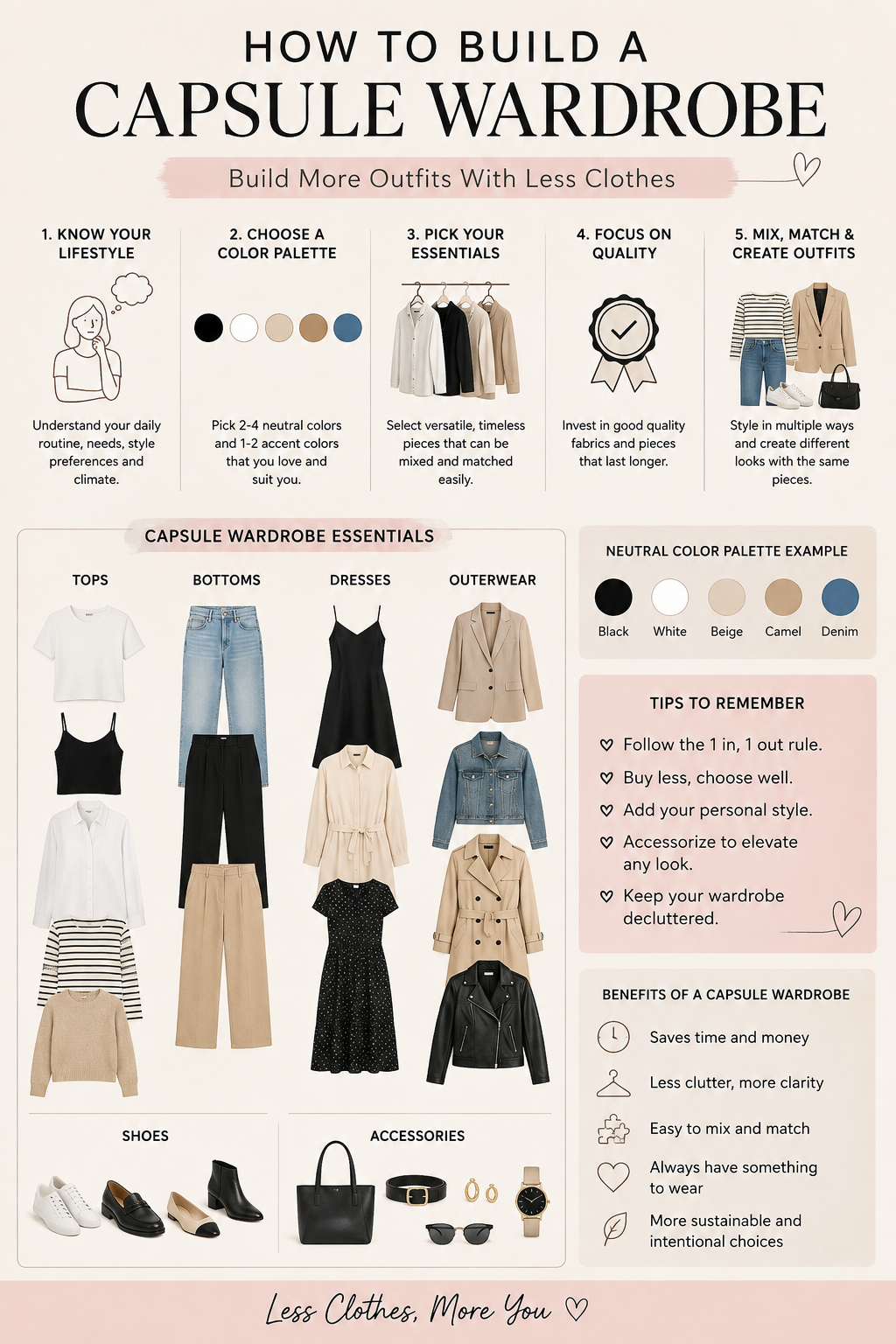
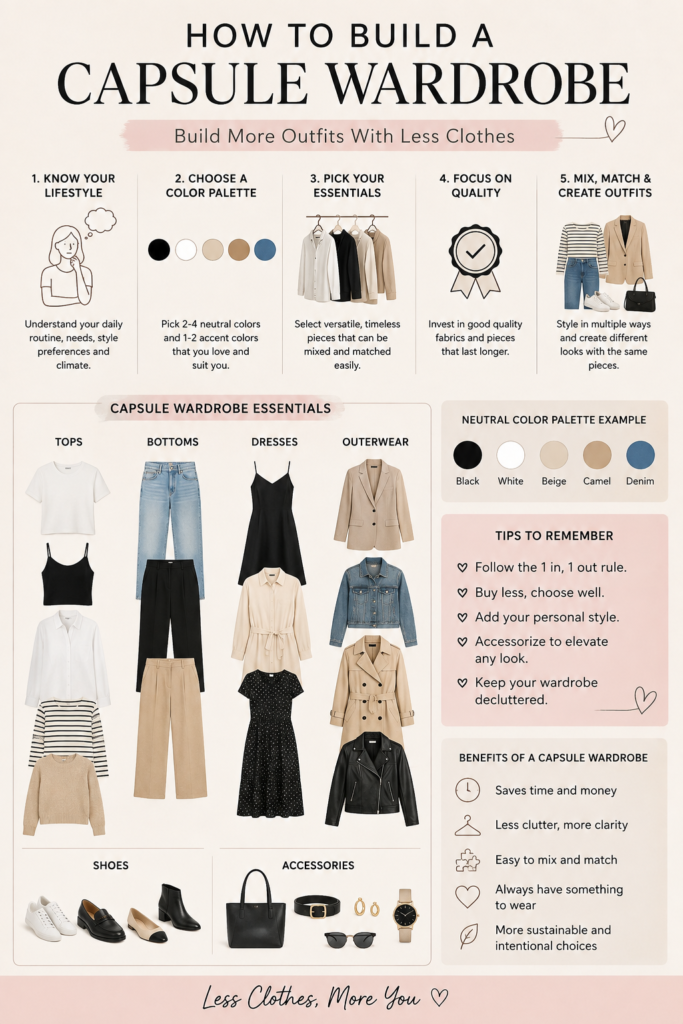
A capsule wardrobe is a carefully selected collection of versatile clothing pieces that can be mixed and matched to create multiple outfits. In 2026, the focus is on minimalism, personal style, quality basics, and intentional shopping rather than owning a huge number of clothes.
1. Start With Your Lifestyle
Before buying anything, think about what you actually wear.
Consider:
- Work or college outfits
- Casual everyday clothes
- Party or occasion wear
- Weather and season
- Your favorite colors and styles
- How often you do laundry
Your capsule wardrobe should fit your real lifestyle, not someone else’s Pinterest board.
2. Choose a Simple Color Palette
Pick 2–4 neutral colors as your foundation. For example:
Black + white + beige + denim
Then add 1–3 accent colors that you love.
This makes it much easier to mix and match your clothes without feeling like you have “nothing to wear.”
3. Invest in Essential Basics
A good 2026 capsule wardrobe can include:
- 2–3 basic T-shirts
- 1–2 fitted tops
- 1 white or neutral shirt
- 1 pair of straight-leg jeans
- 1 pair of trousers
- 1 versatile skirt
- 1 casual dress
- 1 blazer or lightweight jacket
- 1 cardigan or sweater
- 1 pair of comfortable sneakers
- 1 pair of flats or loafers
- 1 versatile handbag
You don’t need to buy everything at once. Build your wardrobe gradually.
4. Prioritize Versatility
The best capsule wardrobe pieces can be styled in several ways.
For example, a white shirt can be worn with:
- Jeans + sneakers for a casual outfit
- Trousers + loafers for a polished look
- A skirt + heels for dinner
- Over a dress as a lightweight layer
One versatile piece can create several different outfits.
5. Follow the “One In, One Out” Rule
When you buy something new, consider removing something you no longer wear.
Ask yourself:
“Would I buy this again today?”
If the answer is no, it may be time to donate, sell, or repurpose it.
6. Don’t Forget Accessories
Accessories can completely change the appearance of the same outfit.
Try adding:
- Belts
- Sunglasses
- Scarves
- Minimal jewelry
- Handbags
- Hair accessories
- Watches
This allows you to create different looks without constantly buying new clothes.
7. Shop More Intentionally in 2026
Instead of following every microtrend, choose trends that genuinely suit your personal style.
Before purchasing something, ask:
“Can I style this with at least three things I already own?”
If yes, it’s more likely to become a useful capsule piece.
8. Create Outfits Before You Shop
Take photos of your favorite clothing pieces and make a small outfit album on your phone.
Try creating at least 10–15 outfits from your existing wardrobe first.
You’ll probably discover combinations you hadn’t considered before—and you’ll know exactly what your wardrobe is missing.
9. Build Your Wardrobe Around Three Categories
Divide your clothes into three groups:
- Basics: T-shirts, jeans, trousers, neutral tops
- Statement pieces: Printed tops, colorful dresses, trendy jackets
- Layering pieces: Blazers, cardigans, denim jackets, sweaters
This makes it easier to create outfits without buying too many clothes. Your basics form the foundation, while statement and layering pieces add personality.
10. Choose Quality Over Quantity
A capsule wardrobe is an opportunity to invest in pieces you can wear repeatedly. Instead of buying five inexpensive items you may stop wearing after a few months, consider buying one well-made piece that fits properly and works with several outfits.
Look for comfortable fabrics, good stitching, durable zippers and buttons, and pieces that maintain their shape after washing.
11. Dress for Your Personal Style
Your capsule wardrobe should represent you.
If you love feminine outfits, include dresses, skirts, and delicate accessories. If you prefer a casual style, focus on jeans, oversized shirts, sneakers, and relaxed basics.
Don’t create a capsule wardrobe simply because a certain aesthetic is trending. The best wardrobe is one that makes you feel comfortable and confident.
Looking for more inspiration? Explore current fashion trends through Marie Claire
Final Thoughts
A capsule wardrobe in 2026 doesn’t mean giving up fashion or wearing the same outfit every day. It means becoming more intentional about what you own and choosing pieces that make getting dressed easier.
Start with your existing wardrobe, build around versatile basics, choose a coordinated color palette, experiment with accessories, and shop thoughtfully. With the right combination of essentials and personal style, you can create countless outfits without constantly buying new clothes.
Want more fashion inspiration? Check out these capsule wardrobe tips on ChicSation
Frequently Asked Questions
What is a capsule wardrobe?
A capsule wardrobe is a carefully selected collection of clothing pieces that can be easily mixed and matched to create multiple outfits. It focuses on versatility, personal style, and avoiding unnecessary purchases.
How many clothes should be in a capsule wardrobe?
There is no fixed number. Some people prefer around 20–30 pieces, while others need more depending on their lifestyle and climate. The important thing is that your wardrobe contains pieces you actually wear.
Is a capsule wardrobe only for minimalists?
No. Anyone can create a capsule wardrobe. You can still enjoy fashion, colors, prints, and trends while keeping your everyday wardrobe organized and versatile.
What are the most important capsule wardrobe essentials?
Some of the most useful essentials include basic tops, a versatile shirt, jeans, trousers, a jacket or blazer, comfortable shoes, and a versatile handbag. Your essentials should depend on your lifestyle and personal style.
How do I start a capsule wardrobe without spending money?
Start with the clothes you already own. Remove pieces you never wear, organize what remains, and create different outfit combinations. Only purchase something when you identify a genuine gap.
Can I include trendy clothes in a capsule wardrobe?
Absolutely. The key is moderation. Choose trends that complement your existing wardrobe and that you genuinely enjoy wearing rather than buying something simply because it is popular.
